The Sweet Shop Was Older Than the Sidewalk
Bhuleshwar's Gujarati snack vendors survived four generations of Bombay. The QR code is a different kind of test.
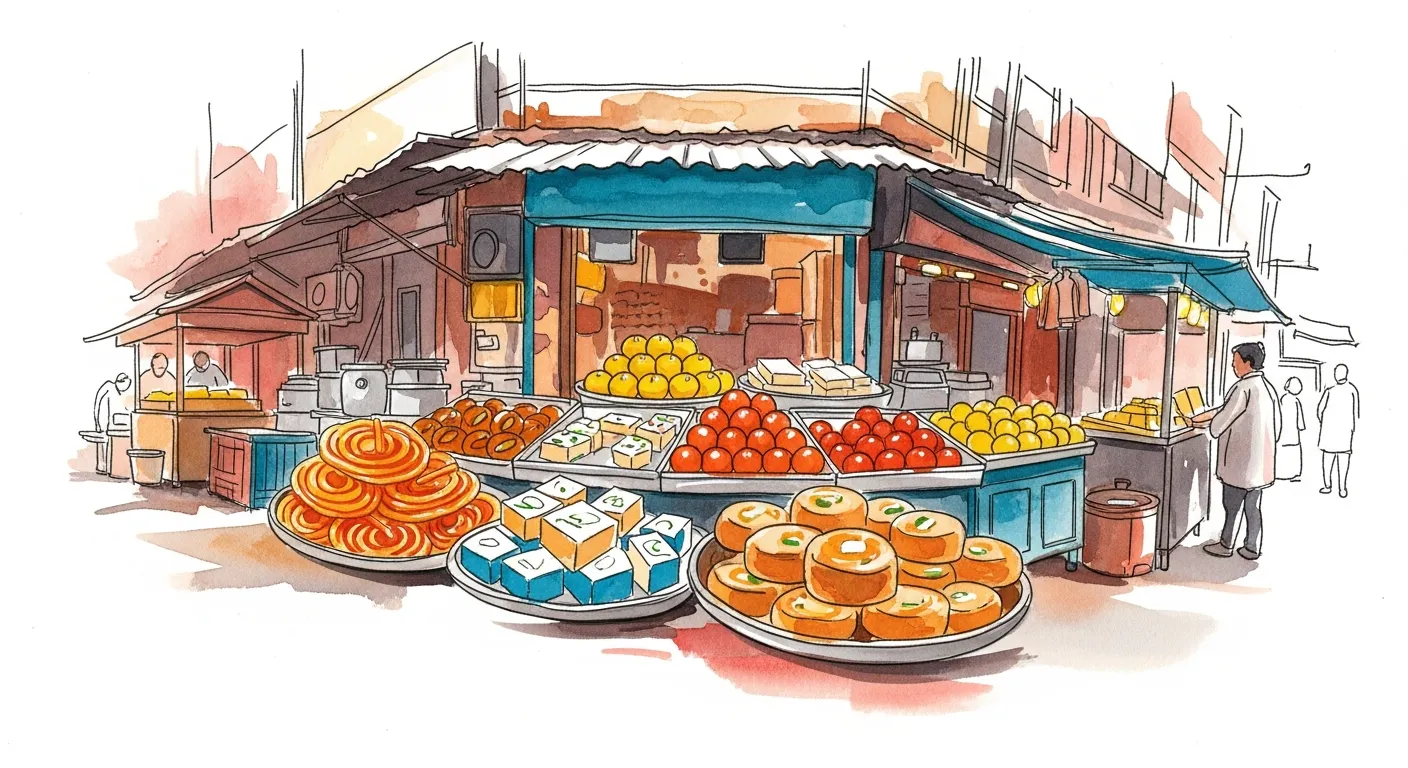
Generated by Imagen 4
In 1803, a fire destroyed most of the walled town of Bombay inside the Fort. The British, spooked by the flames, pushed the native population north, into the marshes and reclaimed flats beyond Crawford Market. The Gujaratis went first. The Marwaris followed. By 1850, the swamp had a name, Bhuleshwar, after a Shiva temple that had been standing there since before the East India Company knew what a monsoon was.
The temple gave the neighbourhood its name. The refugees gave it its economy. And the economy, from almost the first year, ran on snacks.
THE MARKET THAT ATE STANDING UP
Bhuleshwar was never designed. It accumulated. The lanes are narrow because they were bullock-cart wide in 1855 and nobody bothered to widen them. The buildings lean into each other because the plots were carved for families who expected to build up, not out. The pavements, where they exist, are an afterthought bolted onto a street plan that predates the idea of a pavement.
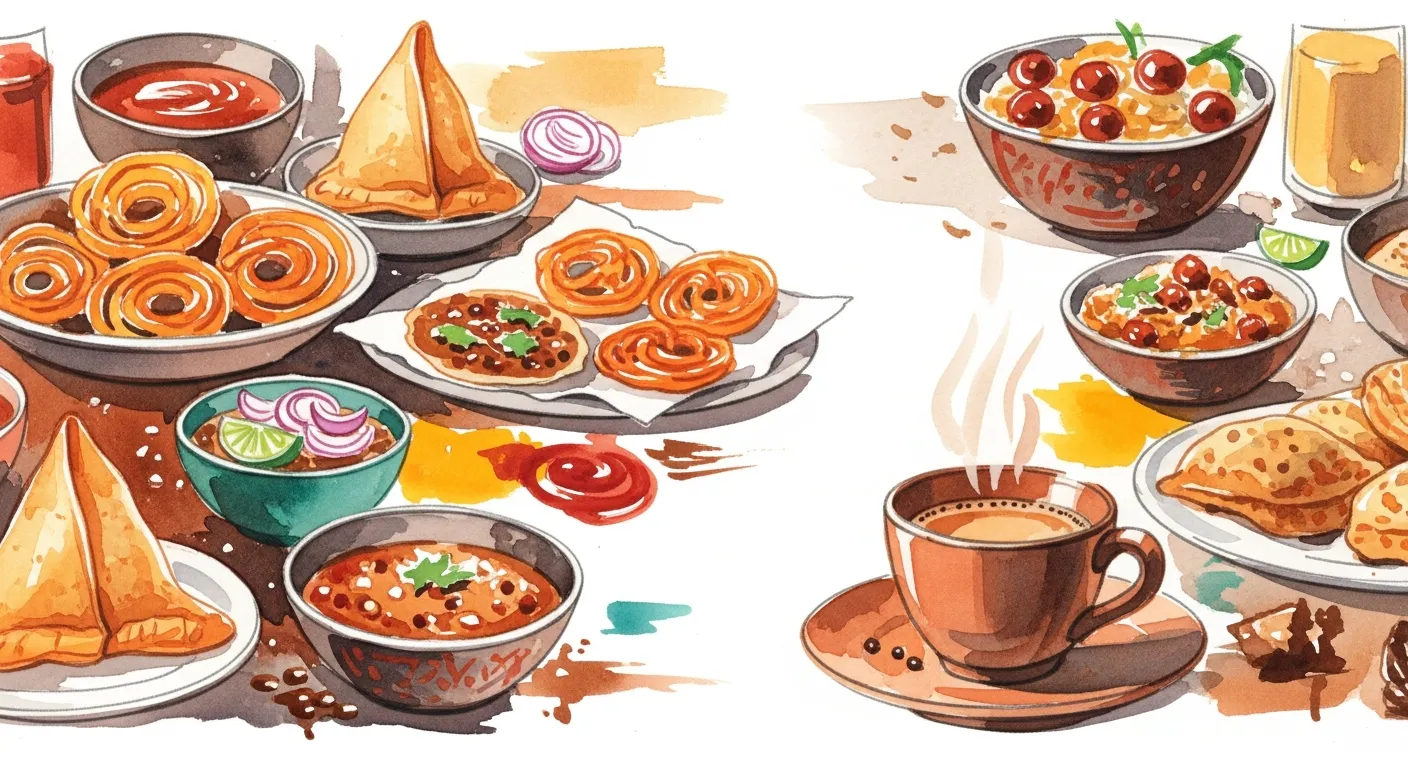
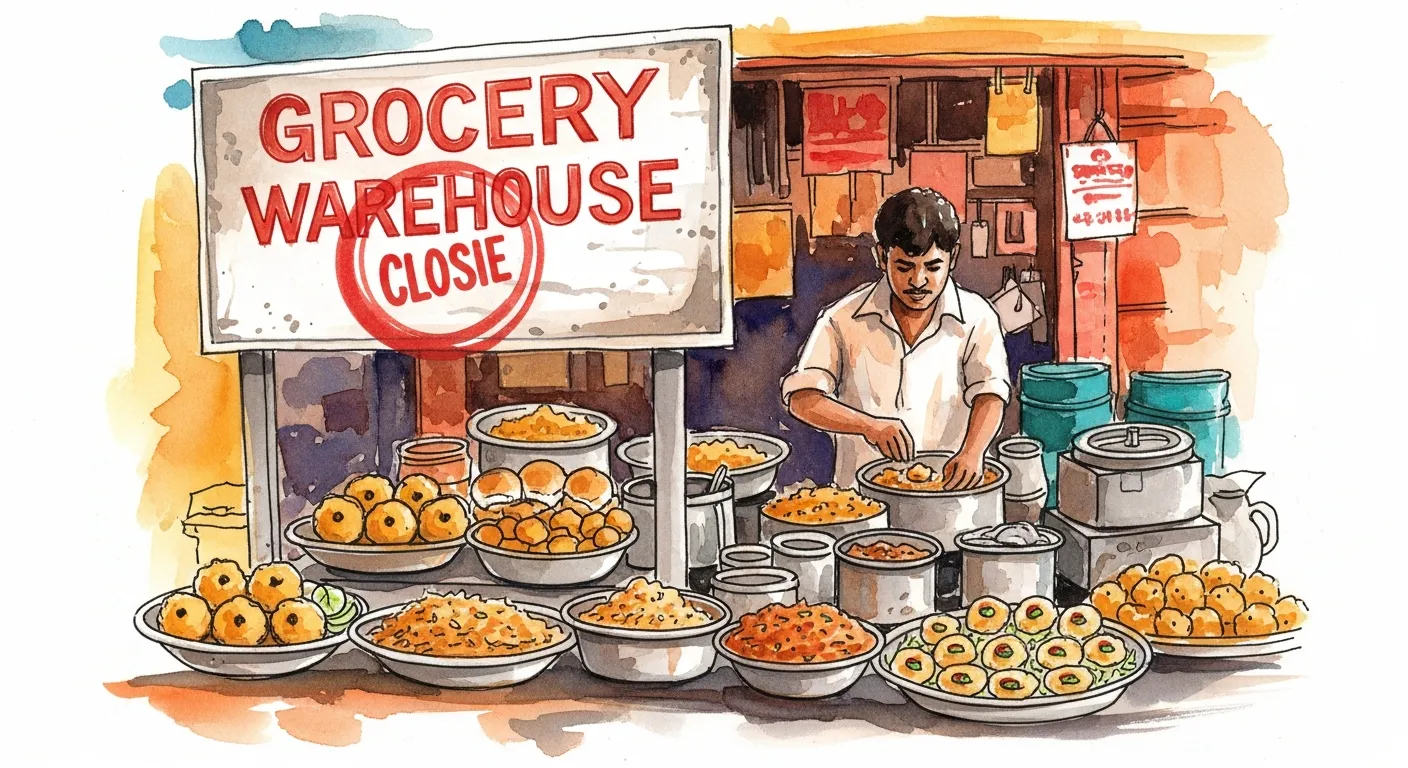
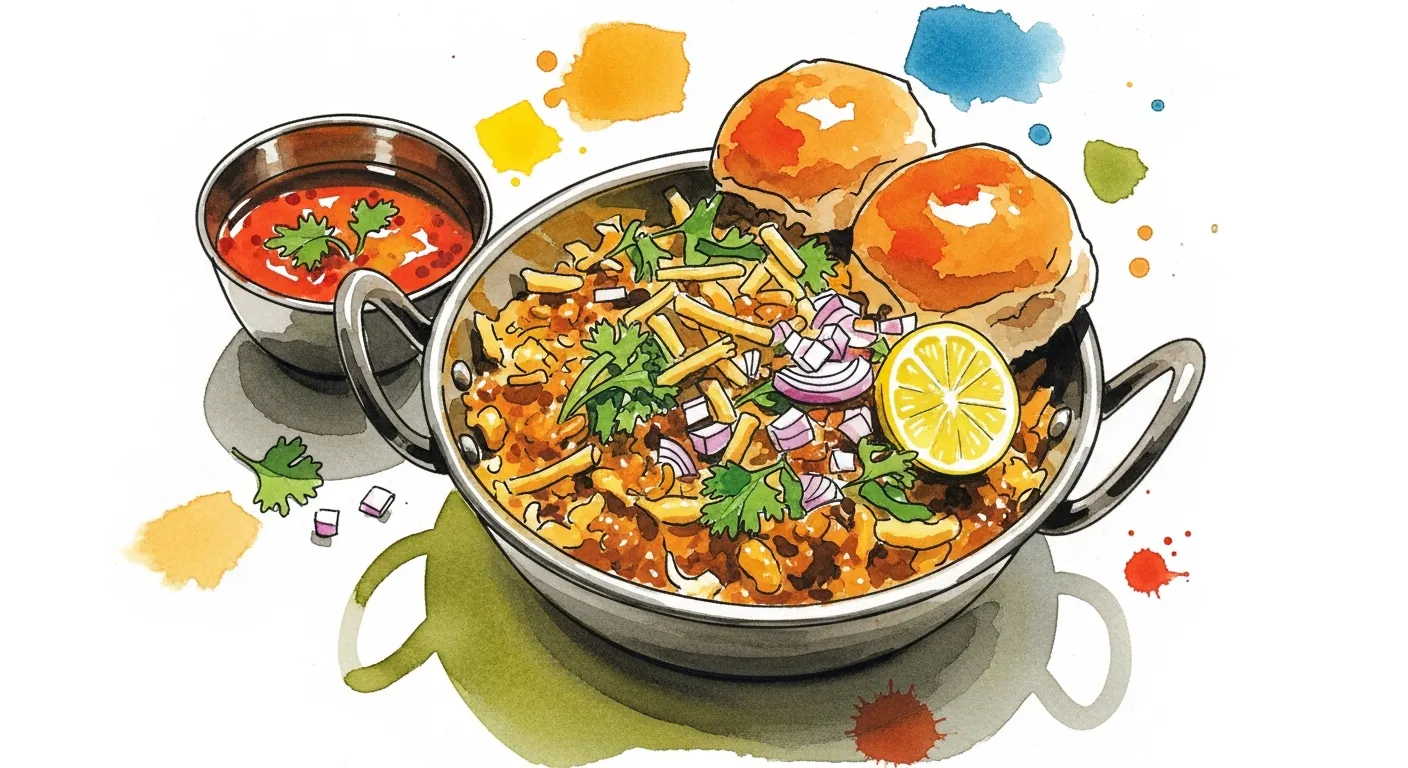
Into this geometry, the food arrived. Fafda in the morning, fried in cast iron kadhais that were already old when the man frying them inherited them. Jalebi coiled into ghee at 6 am for the wholesale cloth merchants coming in from Kalbadevi. Dhokla steamed in tiered aluminium tiffins carried by boys who ran from Panjrapole to Madhav Baug and back before the sun cleared the terrace of the Mumbadevi temple. Ragda pattice at lunch. Bhel by four. Ganthiya and chai until the shutters came down at ten.
Nobody talks about the fact that Bhuleshwar's snack economy is not a food court. It is a logistics system disguised as breakfast.
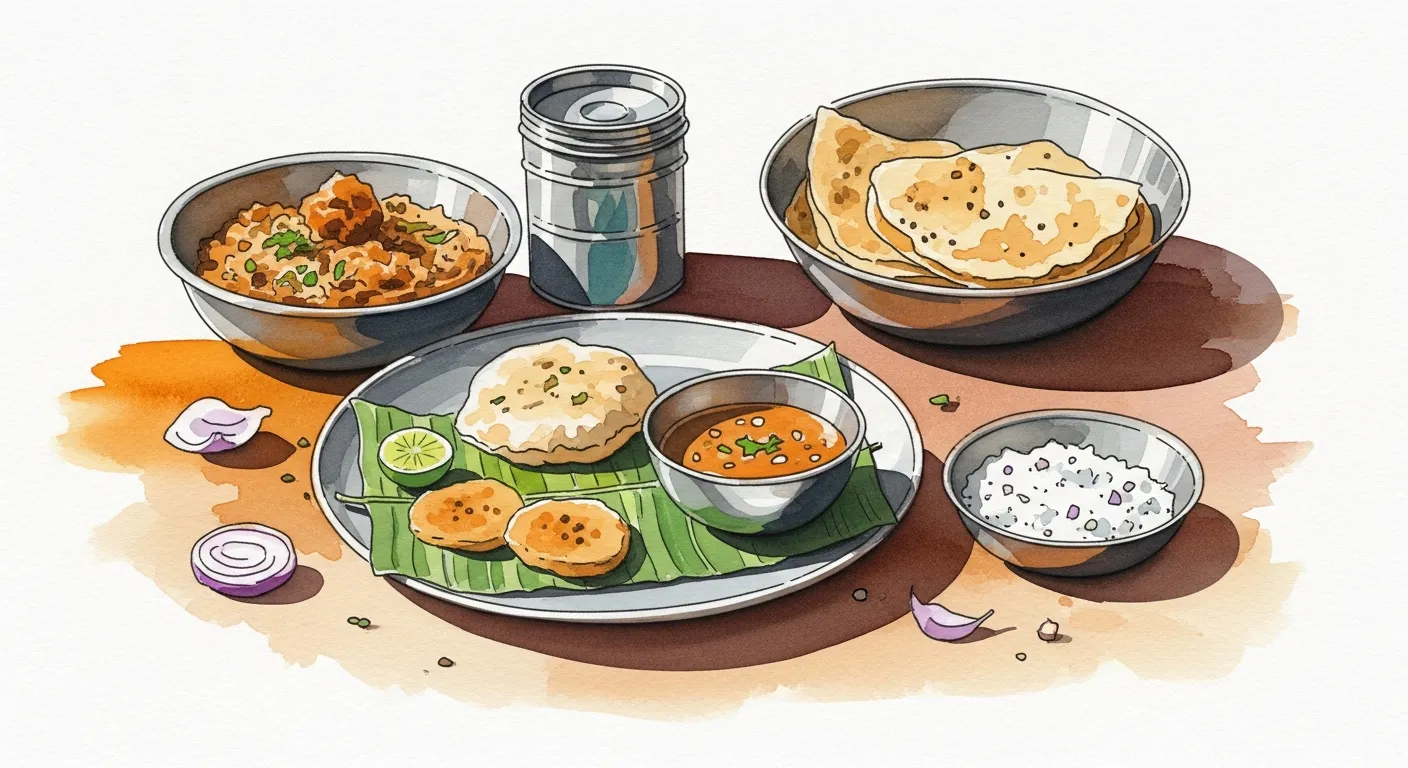
The fafda vendor buys besan from a shop two lanes over that has been grinding it since 1922. The jalebi man's ghee comes from a Marwari wholesaler on Zaveri Bazaar road whose family has been trading in it for six generations. The banana leaves for the dhokla come from a woman who sits at the corner of Panjrapole Lane at 5 am with a bundle she has cut herself in a Vasai village at midnight. Pull any one thread and the whole textile unravels.
The lane is the kitchen. The kitchen is the supply chain. The supply chain is the neighbourhood.
THE FOUR NAMES YOU SHOULD KNOW
In 1955, a man named Chhaganlal set up a fafda-jalebi stall near the C.P. Tank junction. His grandson still runs it. In 1961, a Kutchi family opened a ragda pattice cart outside the Madhav Baug wedding hall, timing their entire annual revenue around the marriage season between November and February. In 1972, during the Bangladesh war rationing, a Marwari widow named Kamla Devi started frying ganthiya on a coal sigri outside her tenement because her husband's cloth shop had folded. Her great-grandson operates the same spot today, though the sigri is gas now. In 1984, after the textile strike hollowed out central Bombay, a former mill worker named Ratilal switched to selling khaman dhokla from a bamboo basket. He is 79. He still shows up at 6 am.
These four are not exceptional. They are the median. Bhuleshwar has hundreds of them, each one anchored to a spot by a combination of family memory, festival calendar, and the geography of who walks past at what hour.
THE POLICY THAT ARRIVED WITHOUT WARNING
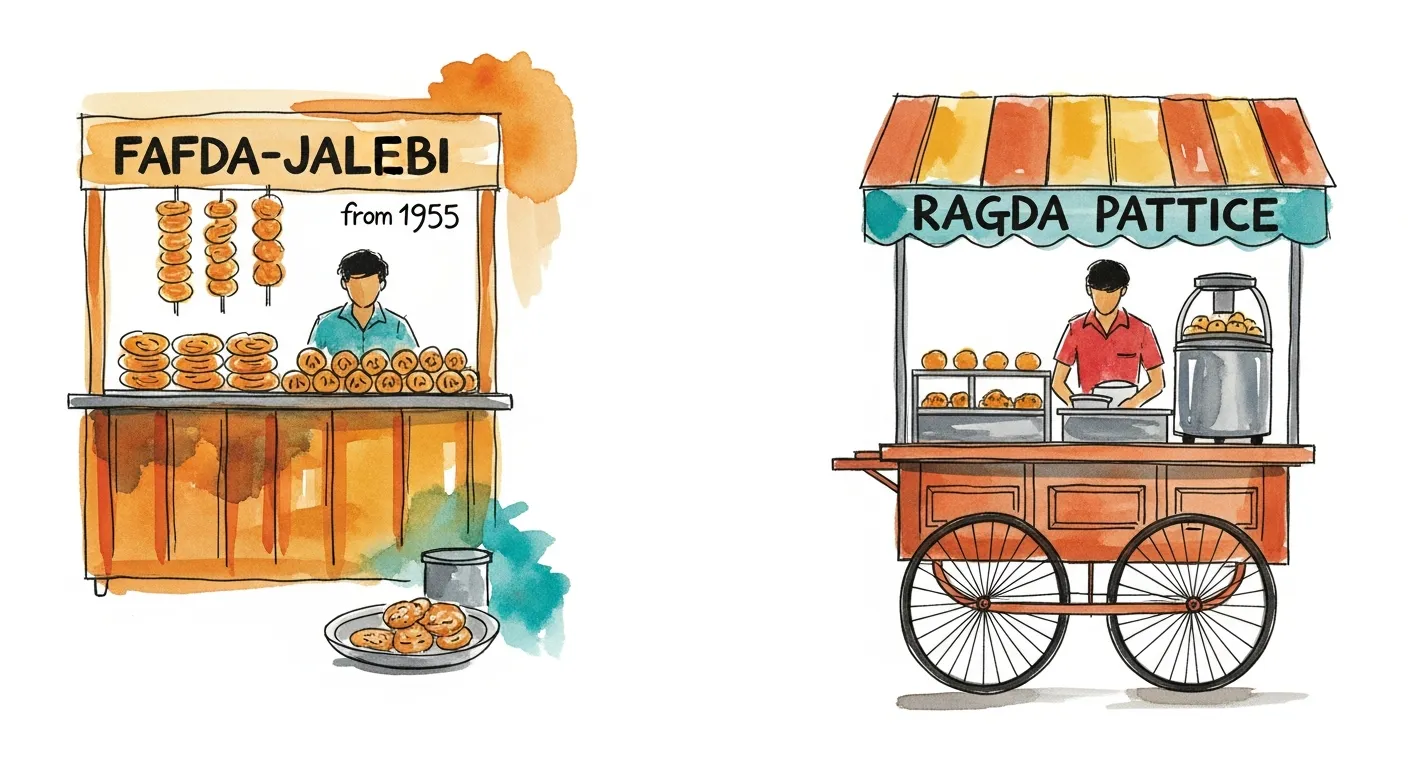
Between 2022 and 2024, according to Feminism in India, over three lakh street vendors were evicted across Mumbai. The reasons cited varied. Beautification. Cleanliness. Pedestrian mobility. Women's safety. Encroachment. The Street Vendors Act of 2014, which was supposed to protect them, was not repealed. It was simply outpaced.
Bhuleshwar, because of its festive footfall and its narrow lanes, sits near the top of the redevelopment list. A Hindustan Times report from 2023 documented cluster redevelopment proposals for the area, framed around modernising infrastructure and attracting new customers, with narrow roads and poor sanitation cited as the core problems to solve. The proposals do not mention the fafda man. They do not need to. He is the narrow road.
The Brihanmumbai Municipal Corporation is rolling out QR code-based certificates for registered hawkers across the city. The policy is administratively sensible. Every vendor with a valid licence gets a scannable badge. Every vendor without one gets moved. The problem is that the licensing regime has been effectively frozen for years. Most of the Bhuleshwar men and women who inherited a spot from a father or grandfather never applied for a licence, because the spot itself was the licence.
A QR code assumes a database. Bhuleshwar was built before the database.
THE FESTIVAL ARITHMETIC
Here is what changes when a Bhuleshwar snack vendor is moved. It is not just his stall. It is his season.
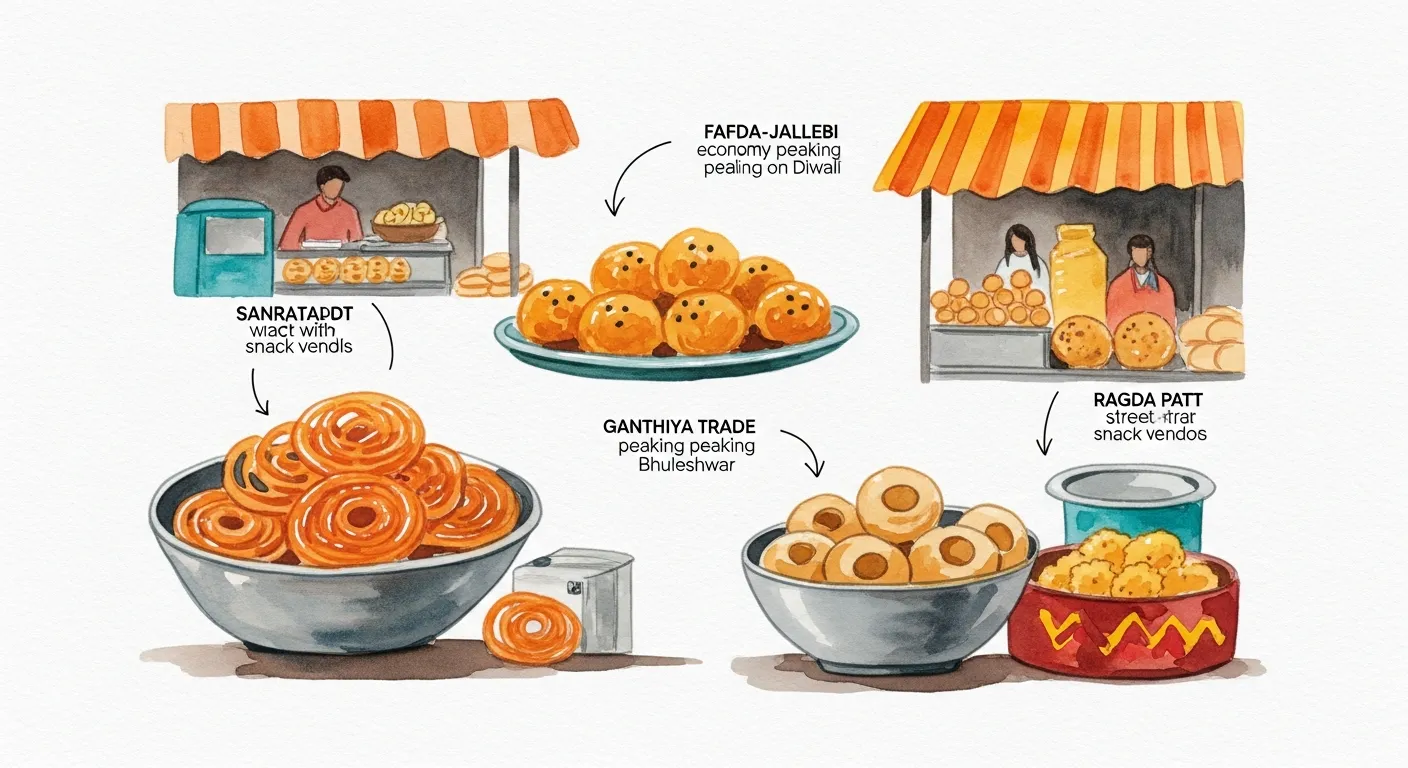
The fafda-jalebi economy peaks on Dussehra. The ganthiya trade peaks on Diwali. The ragda pattice cart outside Madhav Baug does 70 percent of its annual revenue between mid-October and mid-February, timed to the Gujarati wedding calendar. The dhokla basket outside the Jain temple lives off Paryushan in August and September. Move the vendor in April and you have not just cost him April. You have cost him the year.
An academic paper in the International Journal of Environmental Sciences on heritage-sensitive redevelopment in Bhuleshwar makes exactly this point in careful language. The paper notes that improved pedestrian mobility and public infrastructure carry a real threat to intangible cultural heritage and can displace artisan communities. In plainer English, the sidewalk you widen is the sidewalk someone was cooking on.
You cannot widen the lane without narrowing the year.
WHAT THE POLICY DOES NOT SEE
The cluster redevelopment logic treats Bhuleshwar as a physical asset, a set of ageing buildings on narrow lanes with sanitation problems. It is not wrong about any of that. The buildings are ageing. The lanes are narrow. The sanitation is a genuine public health question, especially in monsoon.
But the calculation misses the fact that the food is not incidental to the neighbourhood. It is the neighbourhood's second economy, running parallel to the cloth trade and the jewellery trade, employing thousands of people who do not appear on any commercial rent roll. A widened pedestrian plaza with designated food kiosks, which is the standard outcome of these projects elsewhere in the country, will not house the fafda man. It will house a chain. The chain will pay the licence fee. The fafda man will not.
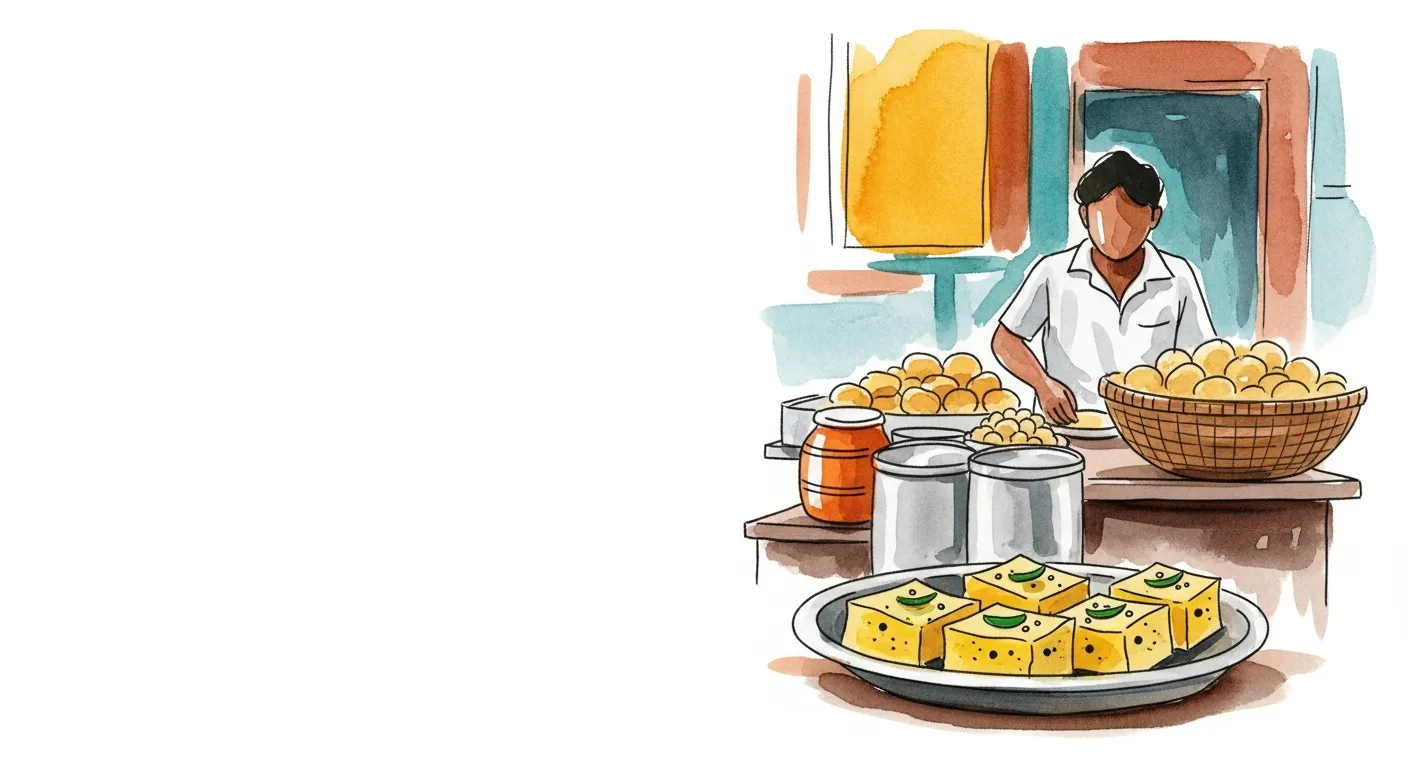
He will move to a lane one block over. Then that lane will be widened. Then he will move again. This is not eviction. It is attrition.
THE QUIET COUNT
Ratilal, the former mill worker who switched to dhokla in 1984, told a local Gujarati paper last year that his basket has moved four times in three years. Each move costs him regulars. Regulars are the entire business. A Bhuleshwar snack vendor does not survive on tourists. He survives on the cloth merchant who has been eating his fafda every Tuesday since 1998.
The market does not close. It thins. A vendor at a time, a Tuesday at a time, a regular at a time.
The temple is still there. The Shiva lingam that gave the neighbourhood its name has watched two centuries of this. It watched the 1803 fire push the Gujaratis in. It watched the 1896 plague push half of them out. It watched the 1944 dock explosion, the 1993 riots, the 2005 floods. Each time, the snacks came back. The kadhai was too heavy to run with. The recipe was in the hands, not the shop.
The QR code is a different kind of test. It does not ask you to leave. It asks you to prove you were ever there.
Chhaganlal's grandson is fifty-two. He has the fafda. He does not have the paperwork.
He shows up at 6 am anyway.
Field Notes
Quick referenceOver three lakh street vendors were evicted across Mumbai between 2022 and 2024.
The neighbourhood is named after a Shiva temple that predates the East India Company's first monsoon in Bombay.
The ragda pattice cart outside Madhav Baug earns 70 percent of its annual revenue in four months, timed to the Gujarati wedding calendar.
The besan for the fafda, the ghee for the jalebi, the banana leaves for the dhokla, all sourced within two lanes of each other. Some of those suppliers have been there since 1922.
The Street Vendors Act of 2014 was supposed to protect hawkers. It was not repealed. It was outpaced.
Get the next story first
Join the Bhukkads. Free, no spam, just stories.
Takes 30 seconds.