The Woman Who Poured First
Forty years ago, a Bombay bar was a room women walked past. Then Shatbhi Basu stepped behind the counter, and the counter never looked the same.
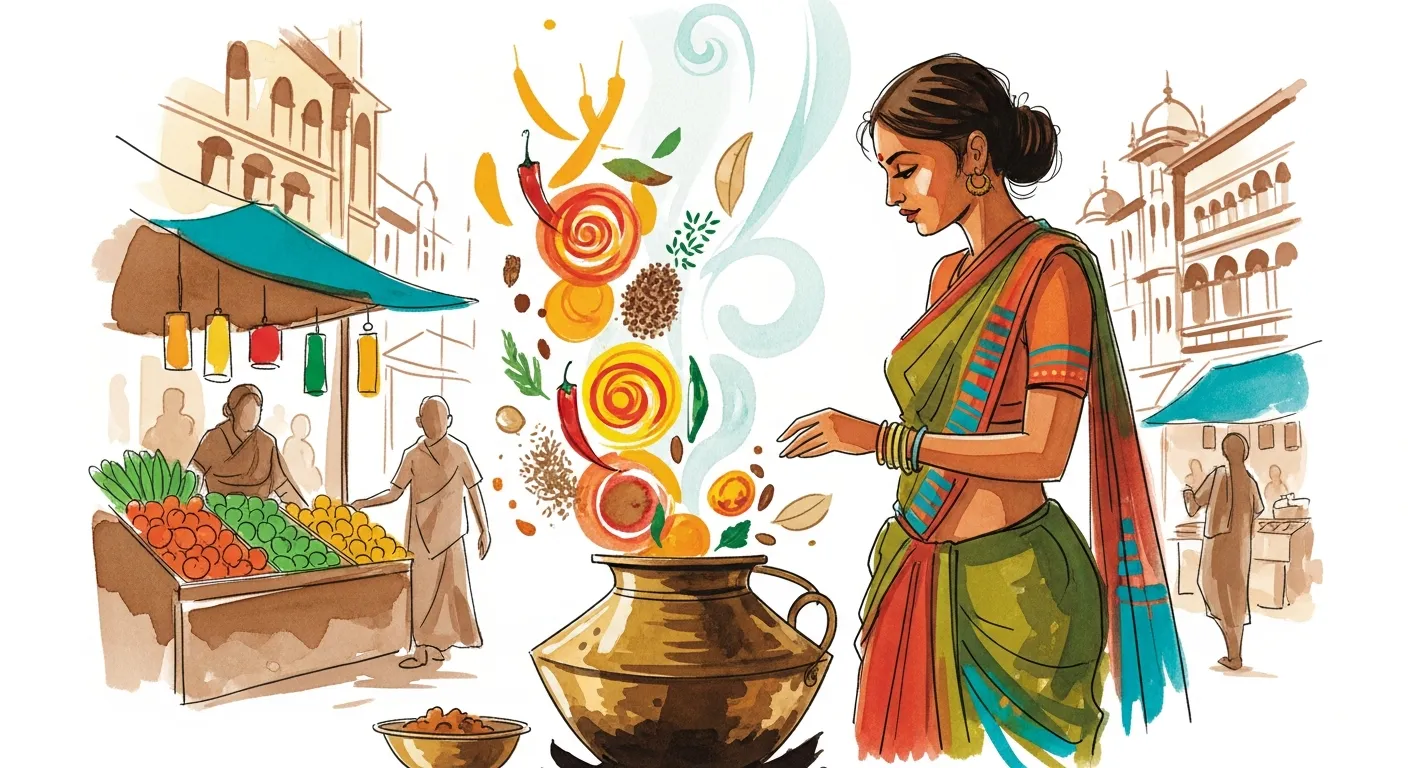
Generated by Imagen 4
The word bartender did not exist in Indian English until fairly recently. Before that, the man who poured your drink was a barman, a steward, a waiter with a bottle. The job was a service posture, not a craft. You ordered whisky. He brought whisky. If you asked him what he thought about the whisky, he would look at you like you had asked the liftman what he thought about the elevator.
Then a woman in her twenties walked into a hotel bar in Bombay in the mid-1980s and asked for a job on the wrong side of the counter.
THE ROOM WOMEN WALKED PAST
In 1984, Bombay's drinking rooms were still shaped by Prohibition's long hangover. Maharashtra had come off dry law in 1963, but the architecture of the bar, dim, wood-panelled, hotel-adjacent, men-only in temperament if not in signage, had not changed. A woman at the bar counter was a scandal. A woman behind it was inconceivable.
Shatbhi Basu was 24. She had trained as a hotelier at IHM Dadar, graduated top of her class, and been quietly steered towards the pastry section, which was where the women were meant to end up. She refused. She wanted the bar.
The first cocktail she was allowed to make in a professional Bombay bar, she made because the male bartender didn't turn up for his shift.
She stayed for four decades.
The pastry section was safer. She picked the bar instead.
WHAT THE BARMAN DIDN'T DO
Nobody talks about how recently the Indian bartender learned to talk back. For most of the 20th century, the job was to pour, to nod, to disappear. The idea that the person mixing your drink might also be reading your mood, adjusting the sugar because you looked like you needed less of it tonight, remembering that you drank Old Monk with soda in 2011 and gin with tonic now, that idea is not old. It is roughly one generation deep.
Basu taught the first wave. In 1994 she founded STIR Academy of Bartending, the country's first bartending school. Her students went on to staff hotel bars across the city, then across the country, then across the Gulf. Ask any senior bartender in Bombay who taught them and there is a decent chance the chain of transmission runs back to a woman who was told, gently and repeatedly, that she should be making desserts instead.
THE CONFIDANTE SHIFT
The Bombay bartender in 2026 is somewhere between therapist and DJ. Feruzan Bilimoria, one of the city's most respected mixologists, has spoken about the number of confessions she has heard across a counter. Breakups. Firings. Diagnoses. The counter is the confessional booth of a city that no longer has time for confessional booths.
This is the part of the job that does not appear on any menu. A good Bombay bartender will pour you a second drink before you ask. A great one will pour you a weaker second drink before you ask, because they can see where the evening is going and they do not want you to lose the plot at their bar.
The bar counter in this city is four feet of wood doing the work of a psychiatrist's couch.
THE NEW ROOMS
Something changed around 2023. The bar stopped being a room and started being an idea. The pattern through the 2026 openings is unmistakable: identity over inventory. The list of gins matters less than the mood in the room.
Fielia, an invite-only cocktail cinema tucked inside Mahalaxmi Race Course, does not have a walk-in door. You are messaged an address. Cocktails arrive paired with a visual sequence, lighting cues, a story. It is a bar that behaves like a screening room.
Idoru, a listening bar in the same 2026 cohort, does the opposite. It removes the visual entirely. The room is built around the sound system. Conversation drops to a murmur because the record on the turntable is the guest of honour. You are not there to be seen. You are there to hear the second side of an album the way it was mixed to be heard.
Fielia sells the image. Idoru sells the silence. Both are selling attention, which is the one thing Bombay has stopped giving away for free.
THE RAAG PROGRAMME
At Ummrao Saaj, a bar that opened in Bombay with a specific classical-music thesis, the cocktail menu is organised around the seven swaras. Sa, Re, Ga, Ma, Pa, Dha, Ni. Each note is translated into a flavour: one bright and citric for the opening swara, one heavier and darker for the closing. The bartender is not asking what spirit you prefer. They are asking what raag you want to sit inside for the next twenty minutes.
This is what a city looks like when its bar scene finally trusts itself. Not a cover of a New York speakeasy. Not a Xerox of a Tokyo listening room. A cocktail programme built out of Indian classical vocabulary, presented without apology and without a footnote explaining what a swara is.
The bar stopped translating itself for a foreign palate that was never actually in the room.
The geography still matters. Colaba, the oldest drinking neighbourhood in the city, still runs on the Leopold and Cafe Mondegar rhythm, which is to say, on tourists, on regulars who have been regulars since 1978, and on the low hum of a room that has seen everything and is unimpressed by all of it. The drinks are secondary. The room is the drink.
Bandra shifted around 2015. What used to be a suburb with three bars became the axis of the new scene, driven by rents that were briefly reasonable and a crowd that was willing to try a mezcal cocktail before the word mezcal was on the general public's tongue. Lower Parel is where the money went, big rooms, big lists, big glassware, cocktails that arrive on ceramic and cost the equivalent of a decent lunch.
Each neighbourhood pours differently. A negroni in Colaba tastes older than a negroni in Bandra, which tastes younger than a negroni in Lower Parel, which tastes more expensive than both. Same three ingredients. Three different cities.
THE COUNTER, STILL
Basu is 65 now. She still teaches. Her students run bar programmes at hotels she was once not allowed to walk into as staff. The city she started in had maybe a dozen bars that took the craft seriously. The city she works in now has hundreds, and a generation of bartenders, many of them women, who do not have to explain why they are behind the counter.
The first cocktail she made professionally, the one on the shift the barman didn't show up for, she has never named publicly. Whatever it was, it was probably badly balanced, probably too sweet, probably poured with the wrong ice.
It didn't matter. She had already crossed the counter.
Field Notes
Quick referenceSTIR Academy of Bartending, India's first bartending school, opened in 1994. Basu was 34.
Idoru, Bombay's newest listening bar, is built around a turntable. The record is the guest of honour. You are not.
Ummrao Saaj organises its entire cocktail menu around the seven swaras of Indian classical music. Sa through Ni. Citric to dark.
Fielia at Mahalaxmi Race Course has no walk-in door. You get messaged an address. Cocktails arrive with lighting cues.
Maharashtra came off Prohibition in 1963. The bars changed. The temperament of those bars took another two decades to follow.
Get the next story first
Join the Bhukkads. Free, no spam, just stories.
Takes 30 seconds.