The Kitchen Without a Door
In Andheri East, five brands are cooking out of one room. The rent is split. The cuisine is not.
Generated by Imagen 4
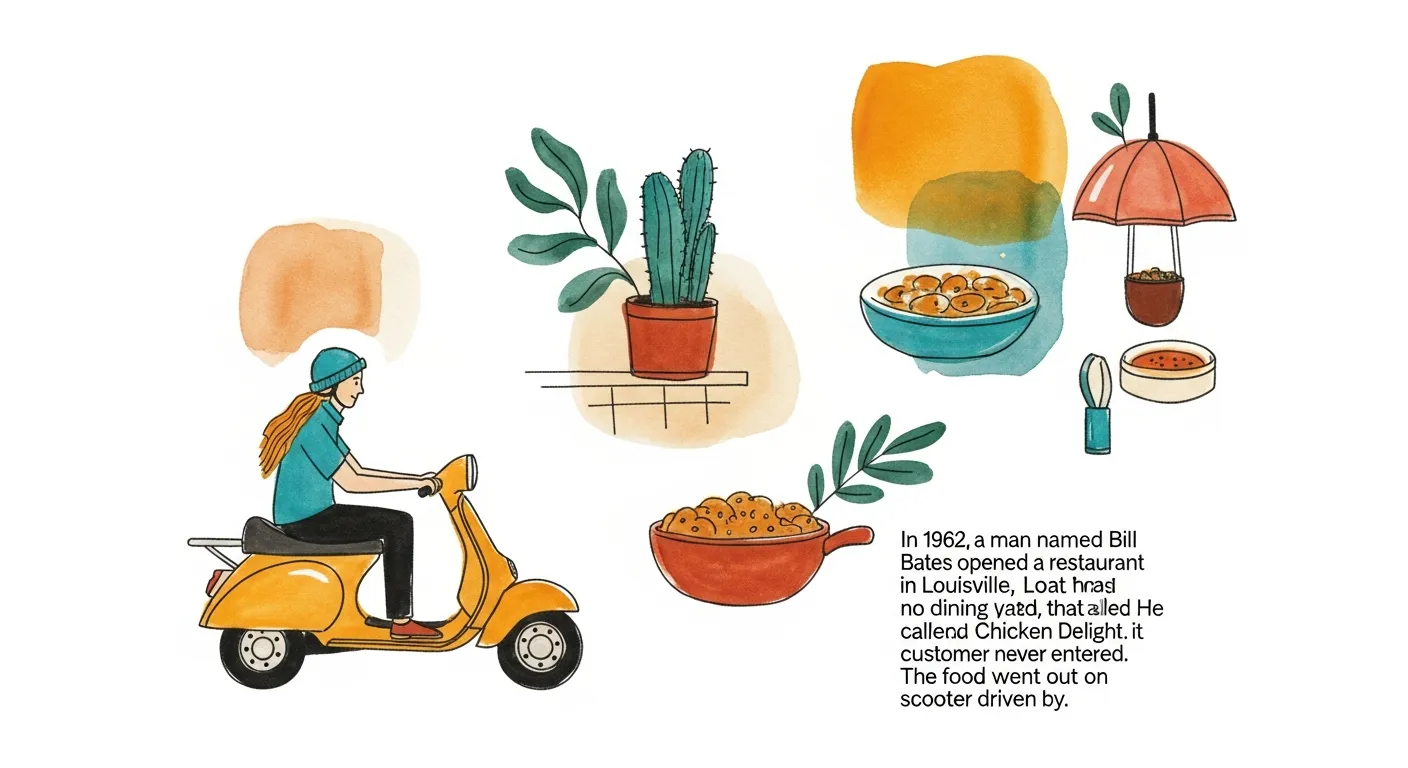
In 1962, a man named Bill Bates opened a restaurant in Louisville, Kentucky, that had no dining room. He called it Chicken Delight. The customer never entered. The food went out on a scooter driven by a college kid who was paid in tips and the occasional gas voucher. Bates was not trying to invent anything. He was trying to avoid paying for a dining room. Rent had climbed. Waiters wanted wages. The parking lot cost as much as the kitchen.
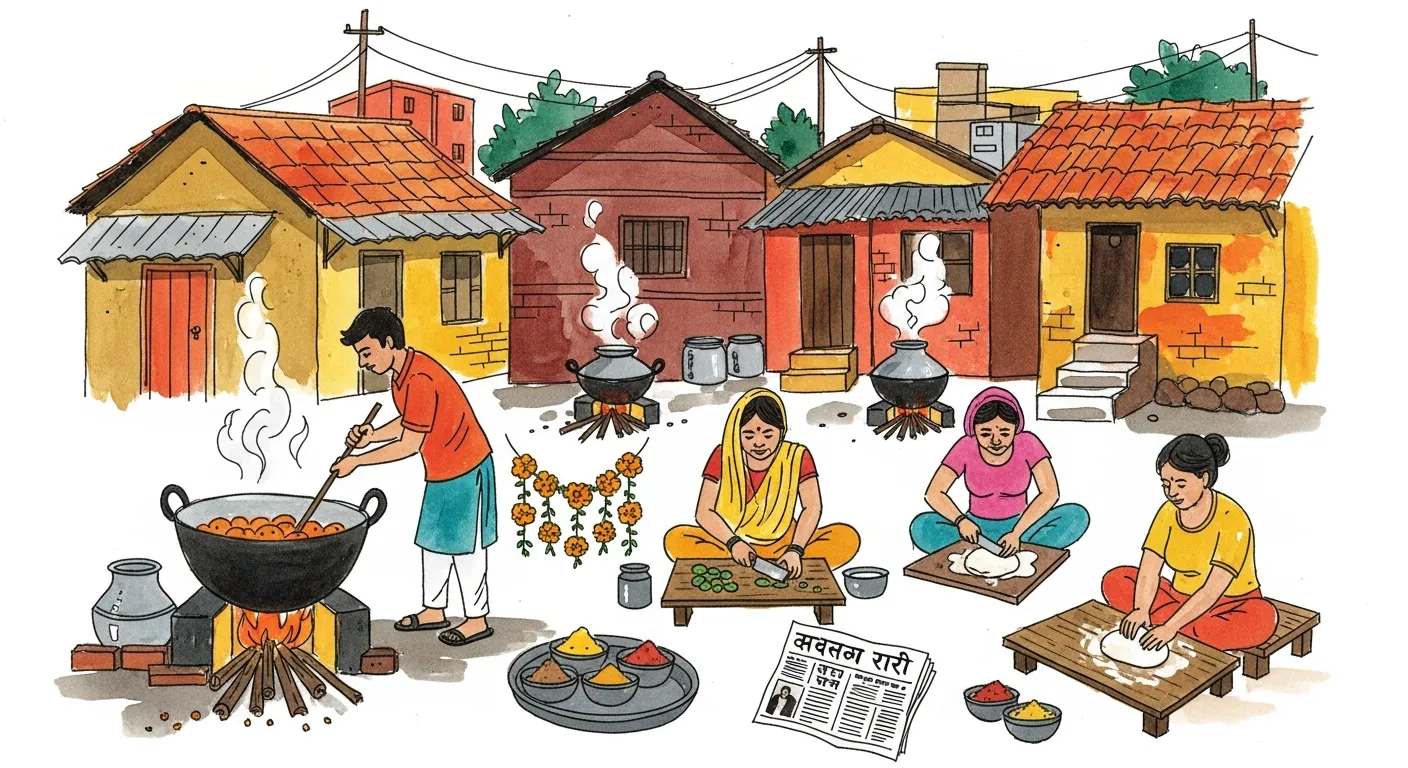
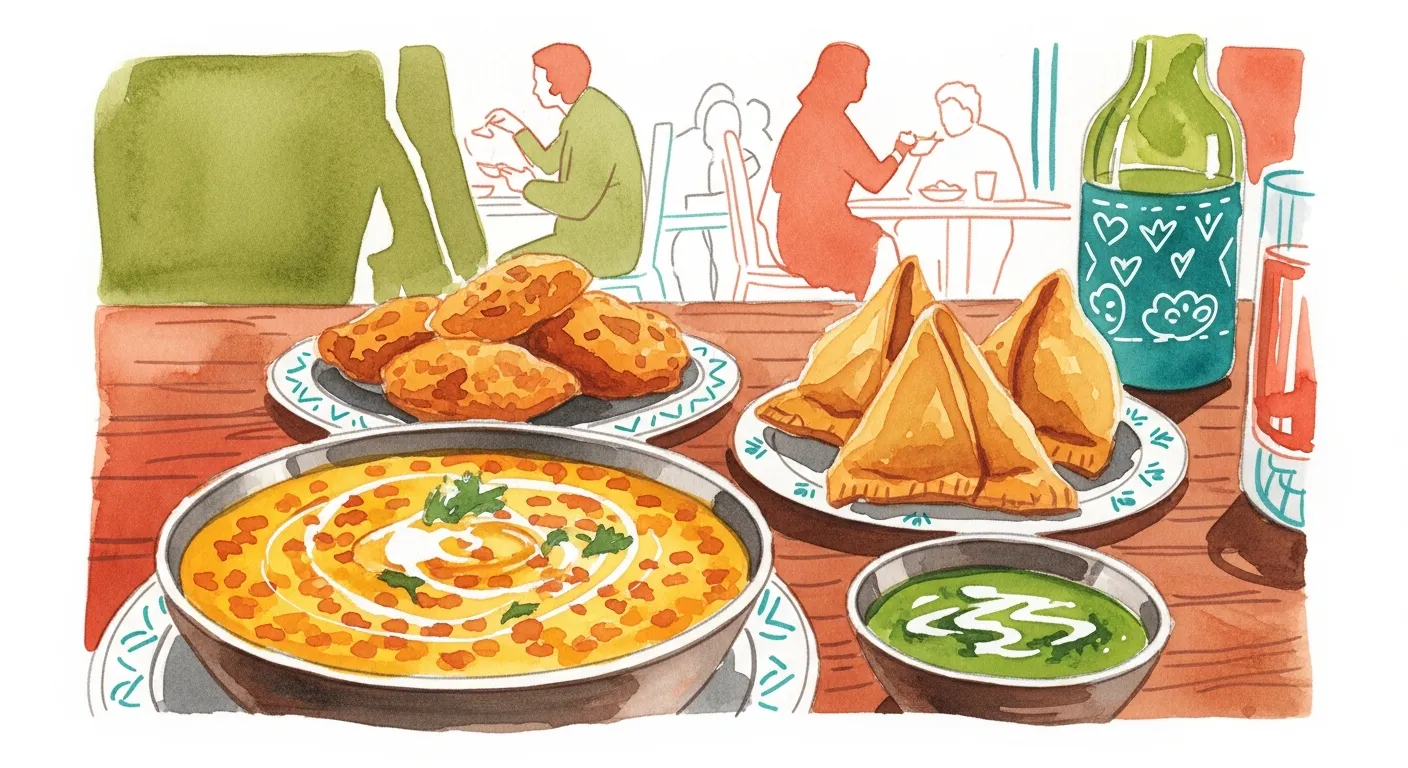
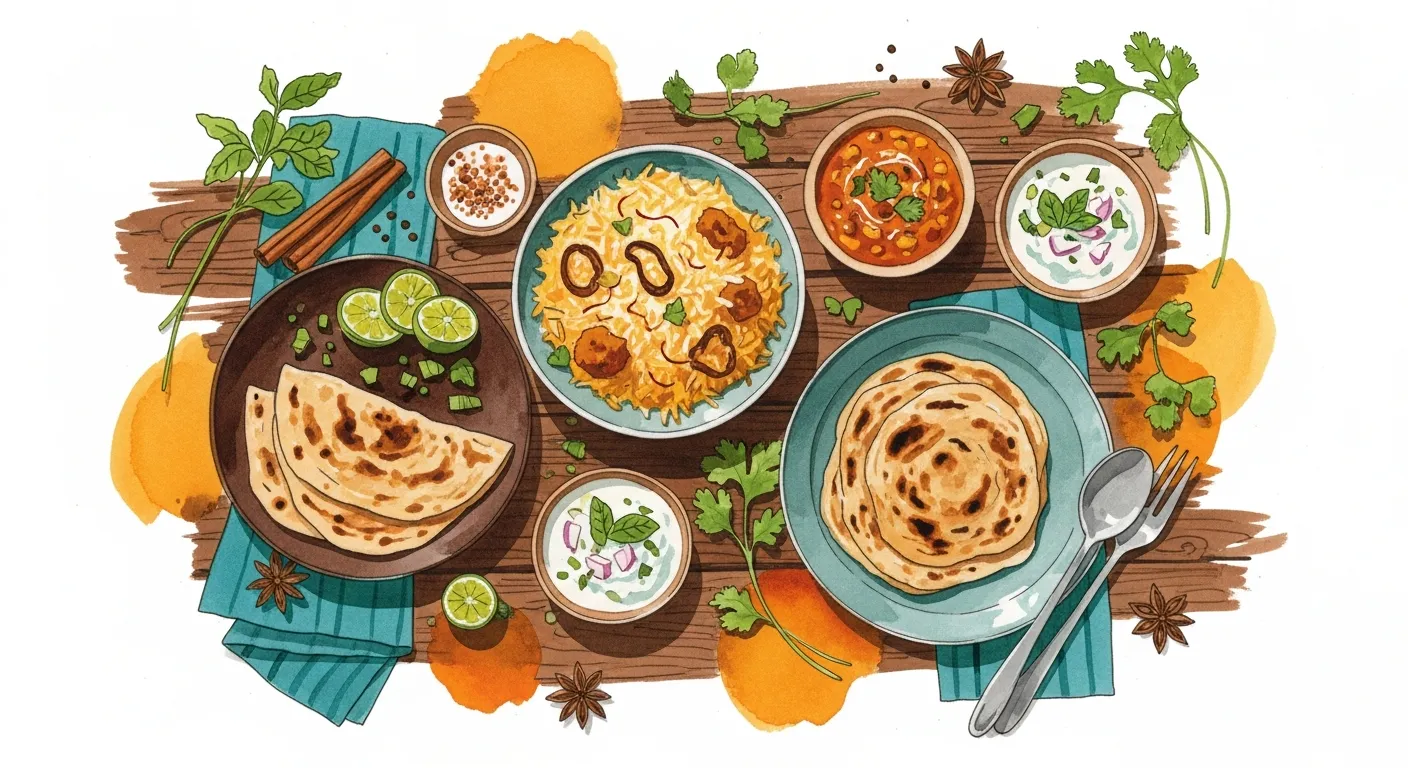
Sixty-four years later, in a 600 square foot room above a printing press on Marol Naka, a woman is frying Manipuri eromba at 11:47 am for a customer in Powai who has ordered it under the name of a brand called Ima's Table. The same woman, at 12:15, will plate a Bohri smoked kheema samosa under a brand called Dawoodi Dabba. At 1:30, she will assemble a Naga bamboo shoot pork bowl under a brand called Hornbill. Same kitchen. Same stove. Same woman. Three cuisines that would not, in the traditional Bombay restaurant economy, have survived a single lease renewal.
The dining room is gone. What replaced it is more interesting than what left.
THE ROOM ABOVE THE PRINTING PRESS
Andheri East was not supposed to become anything. In 1946, it was a mosquito problem attached to a railway station. The Sahar airport, then a grass strip serving Air India Constellations, was surrounded by salt pans and Koli villages that had been there since before the Portuguese noticed the creek. The MIDC industrial estate arrived in the 1960s. The offices came in the 1990s. The residential towers followed the offices, as they always do, and the food followed the residential towers, as it always does.
What nobody talks about is that Andheri East, by 2020, had produced a very specific piece of real estate. A first-floor or second-floor 500 to 800 square foot commercial unit, gas connection sanctioned, three-phase power, a service lift, and no customer footfall requirement whatsoever. The kind of space a chartered accountant would rent, or a small-scale garment exporter, or, as it turned out, a woman who wanted to cook Manipuri food for a city that had never asked for it.
Current rents for a 600 square foot cloud kitchen unit in Andheri East run between 45,000 and 75,000 rupees a month. A comparable dine-in space in Bandra West, once you add deposit, fit-out, valet, and the two rounds of chai for the inspector, is running eight to twelve times that number by the time the first plate leaves the pass.
A cloud kitchen's fixed costs sit at roughly 30 to 40 percent of an equivalent dine-in restaurant. The dining room, it turns out, was always the most expensive dish on the menu.
THE ARITHMETIC OF FIVE BRANDS IN ONE ROOM
Here is the sentence that changes the economics of Indian food. One physical kitchen typically runs three to five virtual brands, sharing rent, staff, and equipment while listing each brand separately to reach different customer segments.
Read that again. Because the traditional restaurant industry could not read it for twenty years.
A dine-in restaurant is one brand. One name on the awning. One menu on the table. One cuisine, or at most two, because the customer walking through the door has to be told what kind of place this is before they sit down. The awning is the promise. The interiors are the promise. The waiter's uniform is the promise. Break the promise and the customer leaves before ordering.
The dining room forces the kitchen to be one thing. The delivery app lets the kitchen be five.
The app changed the awning. On Swiggy or Zomato, the same 600 square foot room can appear as five separate listings, each with its own logo, its own cuisine category, its own photography, its own customer review pool. Ima's Table is Manipuri. Dawoodi Dabba is Bohri. Hornbill is Naga. Add a South Indian tiffin brand for the 7 am to 10 am window. Add a late-night bowl concept for the 11 pm crowd. Same gas cylinder. Same three cooks. Same rent divided by five.
FOUR PEOPLE, FOUR CUISINES, ONE POSTCODE
In 2019, a former airline crew member named Reema Sarangthem, from Imphal, tried to open a Manipuri restaurant in Powai. The landlord asked her what iromba was. She explained. He raised the rent quote by 15 percent because "unfamiliar cuisine is a risk." She walked. In 2021, she signed a 32,000 rupee lease on a shared cloud kitchen in Marol. Her ngari-based fish curry now delivers 40 to 60 orders on a Sunday.
In 2020, a Bohri home cook named Zainab Kagalwala, whose family had run a wholesale spice business off Bhendi Bazaar since 1954, started sending smoked kheema samosas out of a friend's Chakala kitchen for Ramzan. She never went home. Her operation now runs three shifts out of a shared unit off J.B. Nagar. The thaal she sells on Saturdays is 2,800 rupees for four. The wait is 11 days.
In 2022, a chef named Chuba Ao, born in Mokokchung, cooking previously at a five-star buffet in Powai where his section was labelled "Oriental," quit and rented a slot in a shared kitchen near Sakinaka. He sells smoked pork with bamboo shoot to about 180 customers a month. Most of them are Nagas working in the Andheri East corporate belt. The rest are Bombay eaters who found him through a food blogger's Instagram story.
In 2024, a former investment banker named Ayesha Merchant, who had never professionally cooked, launched a Parsi breakfast brand from a shared kitchen behind the Marol Metro station. She sells akuri and kheema pav to the 8 am office crowd. She breaks even at 22 orders a day. She is doing 60.
Four cuisines that the traditional Bombay restaurant map, ten years ago, would not have supported at scale. Not because Bombay did not want them. Because the rent did not want them.
THE DELIVERY ORDER AS CULTURAL INFRASTRUCTURE
Bombay's average delivery order value has climbed to between 380 and 520 rupees in 2026. That is a specific number doing specific work. It is high enough to support a proper protein, a proper side, and a proper margin after Swiggy takes its cut. It is low enough that a customer in Kandivali will order Naga food on a Tuesday night without treating it as an occasion.
What this creates, quietly, is a discovery mechanism that did not exist before. A Bombay eater in 2010 who wanted to try Manipuri food had to know a Manipuri person, be invited to their home, and hope the person was cooking that day. A Bombay eater in 2026 types "Manipuri" into an app and orders it in 34 minutes.
The cloud kitchen did not invent regional Indian food. It removed the gatekeeper who decided which regional Indian food deserved a dining room.
There is a version of this story that treats the cloud kitchen as pure logistics. It is not. It is a redistribution of who gets to feed the city. The traditional restaurant industry answered to landlords, investors, and the fashion of the neighbourhood. The cloud kitchen answers to the customer who searched "bamboo shoot pork Andheri" at 9:42 pm on a Wednesday.
WHAT THE ROOM ACTUALLY LOOKS LIKE
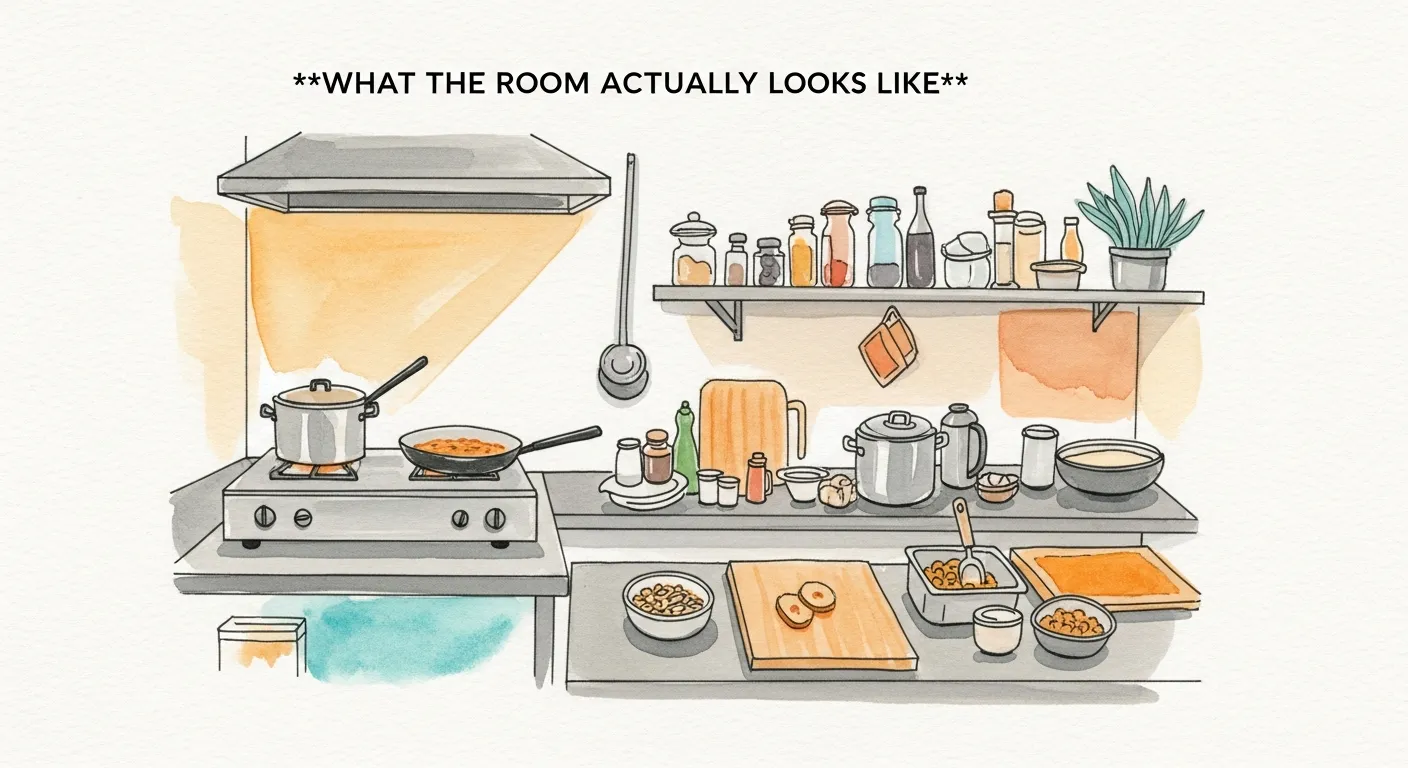
Inside a shared cloud kitchen unit in Andheri East, on a weekday afternoon, the room is smaller than most people's kitchens at home. Four induction hobs. Two commercial gas ranges. A single deep fryer that three different brands take turns using. A tandoor in the corner that only one of the operators paid for and the others rent by the hour. A packing station with five stacks of branded boxes, each stack a different logo.
There is no signboard on the building. There is no menu on any wall. The delivery riders come up in the service lift, collect five orders belonging to five different brands from the same person, and leave. The customer, receiving the food in Vile Parle, has no idea that the akuri and the smoked pork came out of the same room, off the same stove, packed by the same woman who greeted the rider.
The awning used to be the restaurant. Now the awning is a phone screen.
This is not a criticism. It is just an observation. The dining room was doing a lot of work that we mistook for the food. Once you separate the two, the food gets cheaper to make, the cuisine gets stranger, and the person cooking it looks less and less like the person the traditional industry would have hired.
A former airline crew member. A wholesale spice family's daughter. A Mokokchung chef who was tired of the buffet. A banker who woke up one day and decided that akuri was a business.
Bill Bates would have understood every one of them.
Field Notes
Quick referenceThe no-dining-room restaurant model started in Louisville, Kentucky in 1962. It took India sixty years to run with it.
One 600 sq ft room. Five app listings. Five logos. Five review pools. One gas cylinder.
Zainab Kagalwala's Bohri thaal: 2,800 rupees for four. Current wait: 11 days.
Chuba Ao cooked Naga food at a five-star in Powai. His section was labelled "Oriental." He quit and opened his own brand.
Ayesha Merchant's Parsi breakfast brand breaks even at 22 orders a day. She is doing 60.
Get the next story first
Join the Bhukkads. Free, no spam, just stories.
Takes 30 seconds.